
|
|
|
|
1861
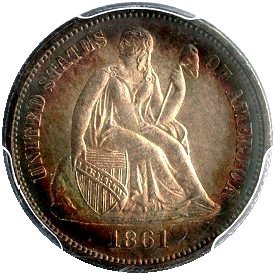
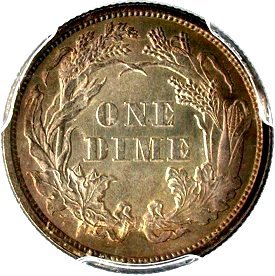
Type I Obverse
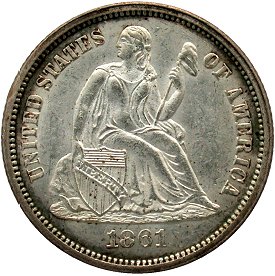
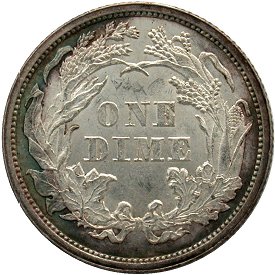
Type II Obverse
Mintage: 1,884,000 (both obverse types) Proofs: 1,000 Type II Obverse
|
Var# |
Obv |
Rev |
DR |
|
Obverse / Reverse Quick Diagnostics |
Ahwash |
Greer |
|
|
|
|
|
|
|
|
Type I Obverse |
|
|
|
* |
1 |
A |
1C |
|
Rusted Die, Medium Date, Downward Slope / DScr In Lower Left Wreath |
A-1 |
|
|
|
|
2 |
B |
1L |
|
Medium Level Date, Clashed Die / Irregular O(N)E |
A-2 |
|
|
|
|
3 |
C |
1R |
|
Weak Date, Medium Level Date / Weak Denomination |
|
|
|
|
|
4 |
D |
1R |
|
Medium Level Date / Die Line into O(N)E |
|
|
|
|
|
4.2 |
E |
1R |
|
Clashed Die, Medium Level Date / Bold Denomination, DCrk Right Wreath |
|
|
|
5 |
F |
1B2 |
High Level Date / Weak O(N)E, D(I)ME | |||||
|
|
5.2 |
G |
1B2 |
|
Clashed Die, High Level Date / DL Wreath To Rim @ 4:30, Die Clash |
|
|
|
|
|
6 |
C |
1R |
|
Bold Date, Medium Level Date, 18 Nearly Touch / Weak Denomination |
|
|
|
|
7 |
H |
1L |
|
Clashed Die, Medium Level Date / Heavily Clashed Die |
||||
|
8 |
I |
2L |
|
Low Level Date Far Right / Polished Die, Bold Denomination |
||||
|
|
|
Type II Obverse |
||||||
|
|
1 |
A |
1R |
|
Proof, Medium Date, Slight Upward Slope / Die Defect On DI(M)E |
|
|
|
|
|
1.2 |
B |
1R |
|
Medium Date, Slight Upward Slope / Doubling Above Upper Oak Leaves |
|
|
|
|
|
2 |
C |
1R |
|
Low Date, Upward Slope / Perfect Die |
A-3 |
|
|
|
|
3 |
D |
1L |
|
Medium Level Date, Die Scratch Shield Lines 2-5 / Perfect Die |
A-4 |
|
|
|
* |
4 |
E |
1R |
|
Medium Date, Up Slope, DD In Lower Shield / Rusted Reverse Die |
|
G101 |
|
|
|
4 |
F |
1R |
|
Medium Date, Up Slope, DD In Lower Shield / Die Lines Through DIM(E) |
|
|
|
|
|
5 |
G |
1B2 |
|
Medium Date, Upward Slope / Perfect Die |
|
|
|
|
|
6 |
H |
0R |
|
Date Left, Medium Date, Slight Downward Slope / Perfect Die |
|
|
|
|
|
7 |
I |
1L |
|
High Date, Slight Downward Slope / Doubling Right Wreath |
|
|
|
|
|
8 |
J |
1B2 |
|
Medium Level Date / Perfect Die |
|
|
|
|
8.2 |
J.2 |
1B2 |
|
Die Erosion, Medium Level Date / Die Crack Left Wreath |
||||
|
|
9 |
K |
1C |
|
Medium Date, Upward Slope / Perfect Die |
|
|
|
|
|
10 |
L |
1C |
|
Medium Date, Downward Slope / Perfect Die |
|
|
|
|
|
11 |
M |
1C |
|
Medium Level Date / Perfect Die |
|
|
|
|
12 |
N |
1C |
|
Medium Date, Slight Upward Slope / Perfect Die |
||||
|
13 |
A |
1R |
|
High Level Date / Double Die Above Oak Leaves |
Variety Vs. Denticle Ruler Cross Reference Table

Scarcity: A common date in all grades except Mint State.  The Type I Obverse is more difficult to locate than the
Type II Obverse, however it is still common below EF.

Updated Greer Rarity Ratings
Rarity Rating Type I: G-VG R1, F-VF R2-, EF-AU R2+, MS R4+
Rarity Rating Type II: G-VG R1, F-VF R1, EF-AU R2, MS R3
Overall Rarity: G-VG R1, F-VF R1, EF-AU R2, MS R3+

                                Fortin Variety Rarity Estimates In VF - Mint State
| Variety |
Rarity |
Variety |
Rarity |
||
|
R3 |
- |
R3 |
- |
||
|
R3 |
- |
R7 |
2500-3000% |
||
|
R4 |
- |
R3 |
- |
||
|
R2 |
- |
R3 |
- |
||
|
R3 |
- |
R3 |
- |
||
|
R3 |
- |
R2 |
- |
||
|
R3 |
- |
R3 |
- |
||
|
R3 |
- |
R4 |
- |
||
|
R4 |
- |
R4 |
- |
||
|
R4 |
- |
R4 |
- |
||
|
R4 |
- |
R3 |
- |
||
|
R3 |
- |
R3 |
- |
||
|
R3 |
- |
R3 |
- |
Comments: During 1861, Longacre updated the obverse hub to improve striking quality.  During that year, obverse
dies were produced from both the Type I and Type II obverse hubs.  The old Type I hub of 1861 has 5 vertical
lines in the upper part of the shield above the banner.  Liberty's index finger also fell on the outside of the
left shield edge.  On the new Type II hub of 1861, there are 6 vertical lines above the banner.  Liberty's
index finger points straight down along the left edge of the shield.  The letters on the Type I hub are thinner
than the letters on the Type II hub.  Once a Seated dime collector becomes familiar with the appearance of the
Type I and Type II obverse hubs from these diagnostics, it is rather simple to identify the hubs by the overall
appearance of Liberty's upper body.  On the Type I hub, Liberty has a fully and more matronly figure while on
the Type II hub, Liberty's upper body and arms are thinner.

As of May 2017, 20 obverse dies have been identified as compared to a mintage of 1,884,000 pieces.  The average mintage
per obverse die is about 100,000 dimes suggesting smaller production batch sizes and limited usage of working
dies.  This finding is supported by the lack of late die state examples where die erosion and die cracking becomes
a problem. Die clashing is frequently seen on Type 1 coinage and this anomaly was further researched in October 2012
resulting in an update to the reverse die numbering and overall variety listing.  The Type 1 section went from 7 listed
varieties to 10 as the reverse dies were closely studied and properly attributed consistent with die clashing observations.

                               Value As A Date (Coin World Trends/CoinValues
| Grade |
1963 |
1973 |
1983 |
1993 |
2003 |
2012 |
|
G |
1 |
2.5 |
6 |
5.75 |
20 |
15 |
|
F |
2 |
4 |
11 |
12.75 |
30 |
25 |
|
EF |
- |
15 |
40 |
38 |
40 |
40 |
|
MS60 |
10 |
90 |
300 |
150 |
200 |
200 |
|
MS63 |
- |
- |
- |
370 |
350 |
500 |
Back to Date and Mintmark Table